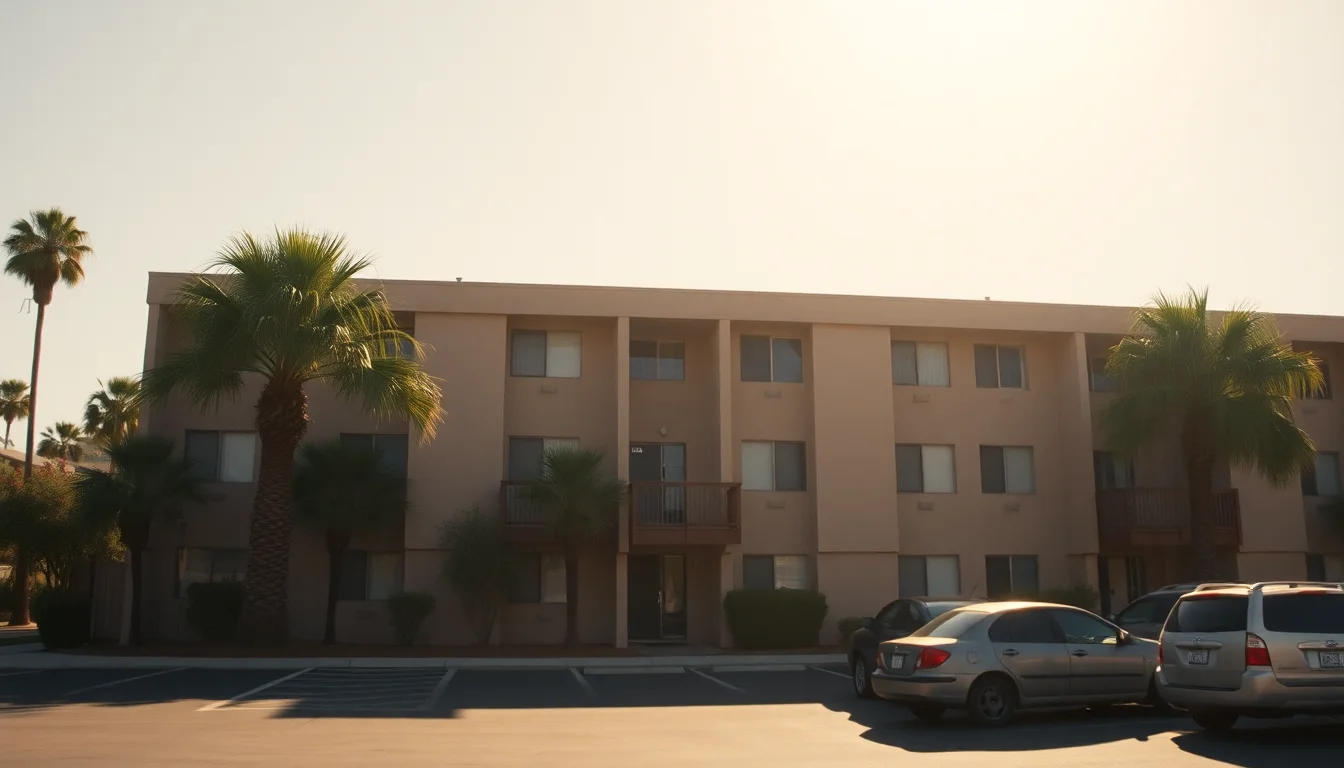
Postmortem: A 47-Unit Phoenix Deal That Died at Refi
This is a composite, anonymized case study constructed from multiple Maricopa County transactions closed between 2022 and 2024. No single deal, operator, or lender is identified. The structural facts are real; the names are not.
The pitch was textbook Phoenix value-add: a 47-unit, 1983-vintage garden-style complex in the West Valley, heavy on two-bedrooms, half the units unrenovated, T12 rents running $200–$250 below what renovated comps were pulling two miles away. The operator — a two-GP shop with three prior Phoenix exits — put it under LOI at $4.2 million in late 2022, or roughly $89,400 per door. They had done this before. They had a bridge lender lined up. They had a pro forma.
The deal closed. The rehab started. The refi never happened.
What follows is an accounting of how the math broke down, where the lender documents created traps the operator didn’t price, and what the failure cost. It is not a story about bad operators. It is a story about a structure that had no margin for error meeting a market that delivered exactly that.
The Capital Stack at Close
The operator paid $4.2M for the asset and budgeted $1.1M in rehab — $23,400 per door across 47 units, targeting full gut of kitchens and baths, new LVP flooring, exterior paint, and parking lot seal. All-in basis: $5.3M. Projected stabilized ARV: $7.5M, based on a direct cap approach at 5.25% on $393,750 of projected stabilized NOI.
The bridge lender — a non-bank debt fund operating in the $50M–$400M AUM range, similar in structure to mid-market shops that proliferated after 2018 — committed at 75% LTC on total cost ($3.975M) with a 24-month initial term, one 6-month extension option at the lender’s discretion, and a fully funded rehab holdback released via draw schedule.
By the numbers at close:
| Item | Amount |
|---|---|
| Purchase price | $4,200,000 |
| Rehab budget (holdback) | $1,100,000 |
| Total cost basis | $5,300,000 |
| Bridge loan at 75% LTC | $3,975,000 |
| Operator equity + mezz | $1,325,000 |
| Projected ARV | $7,500,000 |
| Target refi proceeds (70% ARV) | $5,250,000 |
The spread between the bridge payoff (~$4.1M with accrued interest) and the target refi proceeds looked like a $1.1M equity event. On paper. The agency take-out was penciled as a Freddie Mac Small Balance loan at approximately 6.25%, with a DSCR test floor of 1.25x.
What the Pro Forma Assumed and What the Market Delivered
The operator’s stabilization model assumed 18 months to turn 40 of 47 units, reach 93% occupancy with renovated rents at $1,450/month for 2BRs (from a $1,220 in-place baseline), and generate $393,750 in annual NOI net of a 38% expense ratio.
Three things went sideways, none of them individually fatal, collectively lethal.
First: Phoenix rent growth reversed sharply. The Phoenix MSA absorbed an outsized supply wave from 2022 through 2024 — a product of the 2020–2021 construction pipeline running into an actual delivery cycle. Fannie Mae’s multifamily market commentary flagged Phoenix as one of the top five MSAs for new supply pressure by mid-2024, with effective rents in the West Valley specifically softening as new Class A inventory leased up via concessions that bled into Class B/C pricing. Renovated 2BR rents in the submarket were clearing $1,310–$1,340, not $1,450. That’s a $110–$140/month miss per unit, or roughly $62,000–$79,000 in gross revenue annually — before vacancy.
Second: The draw process ate the rehab timeline. The bridge lender’s draw schedule required a third-party inspector sign-off before each disbursement, with a 10-business-day processing window written into the loan agreement. In practice, draws were running 14–18 business days. On a renovation requiring six draws, that’s 3–4 months of compounded delay baked into the process friction — time during which units sat offline generating no revenue and the interest clock on the full loan balance was running. Draw-process friction is a real cost of capital that appears nowhere in the quoted rate. This deal felt it.
Third: Expense inflation. Insurance premiums on a 1983-vintage garden-style in Maricopa County had roughly doubled from 2021 to 2024. Property taxes reset modestly post-sale. Actual trailing-12 expenses at month 20 were tracking closer to a 44% expense ratio than the 38% modeled. On $612,000 of gross scheduled income (at actual achieved rents), that’s a $37,000 annual swing in NOI that shows up directly in the DSCR calculation.
The net result: at month 22, the asset was generating approximately $315,000 in annualized NOI — not $393,750. Stabilized occupancy was 89%, not 93%.
The DSCR Test and the Extension Trap
At month 24, the bridge loan matured. The operator had not yet secured take-out financing. They exercised the extension option.
The lender’s response illustrated why extension clauses deserve the same scrutiny as the initial rate. The extension — nominally available at the lender’s “sole and absolute discretion,” language that appeared verbatim in the loan agreement — came with two conditions not prominently discussed at origination:
- A 100 basis point extension fee on the outstanding balance (~$4.1M, so approximately $41,000)
- A 25% pay-down of the outstanding principal, reducing the loan to approximately $3.075M
The pay-down requirement was the real problem. The operator had $1.325M in equity at close, had spent into the rehab, and did not have $1.025M in liquid capital sitting in reserve. They could not meet the pay-down condition. They were in technical default within 30 days of maturity.
This is a pattern Trepp has documented in its bridge loan distress reporting: extension conditions in the 2021–2023 vintage of non-bank bridge loans were frequently structured with pay-down triggers designed to reduce lender exposure precisely when property values were under pressure — transferring the equity risk back to the operator at the worst possible moment.
Simultaneously, the operator was shopping agency take-out. The math on a Freddie Small Balance loan at prevailing rates — call it 6.50% by late 2024 given where 10-year Treasury yields had settled — against $315,000 of actual NOI produced a maximum loan amount of approximately $4.2M at 1.25x DSCR coverage. That’s $315,000 ÷ 1.25 = $252,000 maximum annual debt service, which at 6.50% on a 30-year am supports a loan of roughly $3.87M. At 70% of a now-revised appraised value (the lender commissioned a new appraisal; it came back at $6.1M, not $7.5M), maximum proceeds were $4.27M — close on paper, but agency underwriters were applying DSCR tests to in-place NOI, not projected NOI, and in-place was $315,000.
Every agency correspondent the operator approached declined on the same basis: insufficient DSCR on in-place income. One correspondent indicated they would revisit in 90 days if occupancy reached 93% and rents seasoned. The bridge lender was not interested in a 90-day informal extension.
How It Ended
The operator negotiated a distressed payoff. The bridge lender — facing its own warehouse line pressures, consistent with MBA’s reporting on commercial mortgage delinquency trends showing elevated non-bank exposure in Sunbelt bridge loans — agreed to accept $3.6M in full satisfaction of the $4.1M outstanding balance, provided the operator executed a deed-in-lieu within 45 days or sourced a third-party buyer at that floor.
The operator sourced a buyer. The asset sold at $5.85M — below the revised appraisal, but enough to clear the bridge payoff and return approximately $340,000 to the equity stack after transaction costs. Against $1.325M of invested equity and two years of work, that’s a loss of roughly $985,000 in nominal terms, before factoring in GP time and the opportunity cost of capital deployed.
No one went to litigation. No personal guaranty was called. The recourse carve-outs — bankruptcy, fraud, environmental — were never triggered. The operator’s legal exposure was contained, which is the one structural element that worked as intended.
The Operator Lesson
There are several, but one outranks the others: a bridge loan’s extension clause is not an option you own; it is an option the lender owns, priced against you when you need it most.
At origination, this operator read the rate (SOFR + 350, or roughly 7.85% all-in at close), read the LTC (75%), and read the term (24 months + one 6-month extension). They did not stress-test the extension conditions against a scenario in which NOI came in 20% below projection and the lender’s own balance sheet was under pressure. A 25% pay-down requirement on a $4M loan is a $1M liquidity event. If you don’t have $1M in reserve earmarked specifically for that scenario, you are not really holding an extension option — you are holding a clause that transfers the asset to the lender on their preferred timeline.
The MBA’s 2025 commercial real estate finance forecast was cautious on Sunbelt multifamily take-out conditions precisely because the supply-driven rent softness in Phoenix, Austin, and Charlotte hadn’t fully cleared. Operators running tight value-add models in those MSAs should be stress-testing their exit NOI at a 15–20% haircut to projection and asking whether the resulting DSCR still clears agency underwriting at prevailing rates — before close, not at month 23.
The rehab budget was reasonable. The purchase basis was defensible. The market moved, and the structure had no give. That is the deal that dies at refi.